
Lindenwold City Directory Collections
The strongest starting shelf for Lindenwold directories is the Camden County Library genealogy collection. It reports 25 reels from 1863 through 1947, but with missing years. The reels sit on the second floor near the reference desk, while the most current material is kept in storage. The description does not name a publisher, and it does not promise that every reel includes Lindenwold. Open the title page and locality list before treating a year as borough coverage.
| Collection | Years | Where held | How to reach it |
|---|---|---|---|
| Camden County city-directory reels | 1863-1947, with gaps | Camden County Library, second floor | Microfilm; inspect locality coverage reel by reel |
| Camden directories and telephone books | 1839-1998 described collection | Camden County Historical Society (CCHS) | Appointment visit or research request; exact Lindenwold run needs confirmation |
| Courier Post microfilm | October 1949 to present | Camden County Library | Library microfilm; no obituary index is stated |
| Newspapers, WPA files, and obituaries | Nineteenth-century Camden titles through Courier Post material | CCHS Richard H. Hineline Research Library | Appointment or paid research service |
The reel run has conspicuous breaks. No reels are listed for 1918-19 or 1932-39, and the 1940s material is described as Camden City and surrounding towns. Those gaps are useful evidence, not a reason to fill in an address from memory. A missing listing may reflect an absent volume, a locality outside that edition, a different spelling, or an unlisted household.
Note: Record the reel title, publication year, locality heading, and page before using any Lindenwold directory detail in a family file.
Lindenwold Directory Reel Gaps
For the earliest run, the library lists 1863/64 through 1877/78, while noting missing 1868, 1871, and 1873. Listed runs continue through the late nineteenth century and include annual or near-annual reels around 1900/01, 1904/05, 1906/07-08, and 1910/11-1911. Later reels resume from 1920/21 through 1929-31, with some combined years. These are Camden County collection facts, not proof that a particular Lindenwold household appears in each book.
The library’s genealogy page also points to Ancestry Library Edition at its branches. That is a practical companion for census and directory searching, but the volume in hand remains the authority for its printed wording. When a name turns up, capture the street line as printed and check the volume’s abbreviation key rather than expanding initials or marks on assumption.
For a directory collection image, see the Camden County Library genealogy resource.
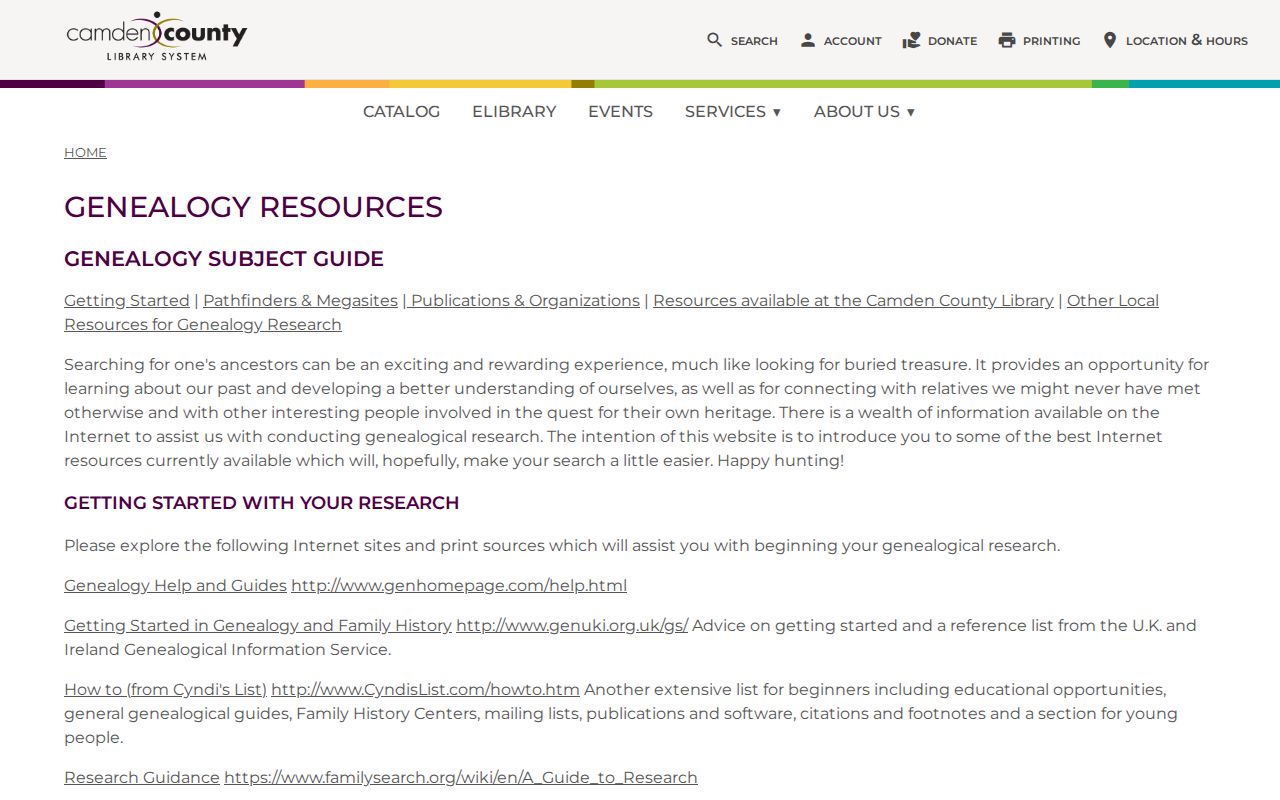
The library route supports a careful Lindenwold reel check by putting the printed volume, its locality heading, and its nearby reference help in the same research stop.
Lindenwold Directory Library Route
Use the library before assuming a web search has failed. The Lindenwold Library offers public research computers, catalog access, scanning and copying, while the county library maintains the microfilm collection. The access sweep gives the county-library reference desk number as 856-784-5602. Staff can help locate a reel, but a requester should arrive with a name variant, a street, a rough year, and a clear question.
The newspaper route is different. The county library has Courier Post microfilm beginning in October 1949 and says staff can search an out-of-town obituary when an accurate death date is supplied, generally within several weeks. There is no stated obituary index. That makes a precise date valuable, and it also means a negative request should be read as a search of the available material, not proof that no notice was printed.
When the reel does not name Lindenwold, try the neighboring locality context shown in the book, then ask the desk whether a telephone book or reverse section is held separately. The research did not confirm a separate reverse-directory run at the county library.
Read a Lindenwold City Directory Entry
No inspected official source provided an actual scanned Lindenwold entry. That limit matters. Rather than treating a generic example as a local record, copy the elements exposed by the actual volume and label any absent field as not printed. Start with the title page because it identifies the year, edition, publisher if shown, and geographic scope. Then determine whether the page is a name listing, a street listing, a reverse section, or an advertisement.
| Volume details | Title, publisher if printed, publication year, locality heading, and page or image number. |
|---|---|
| Name line | Exact spelling, initials, suffixes, and cross-reference wording. |
| Address line | Street number, street name, apartment or unit if printed, and any householder notation. |
| Role line | Work or organization wording only when the volume prints it, without adding an interpretation. |
| Entry type | Primary name, street listing, reverse directory, business listing, or advertisement. |
- Criss-cross directory
- A directory arranged by street or address as well as by name. CCHS is the stronger documented fallback for telephone books and reverse-style research because its request form names those collections.
- Householder index
- A listing organized around the household or address line. Confirm the book’s own heading before assigning that label.
- Abbreviation key
- The explanation of shortened terms and symbols, usually printed in the volume. Photograph or transcribe it before decoding an entry.
Lindenwold Directory CCHS Requests
The Camden County Historical Society research library is the broader historical fallback. Its holdings include nearly 100,000 books, manuscripts, photographs, maps, diaries, scrapbooks, deeds, church records, newspapers, yearbooks, WPA cards, genealogies, Camden and Philadelphia directories, and census material. Its death, burial, and obituary database has almost 225,000 names, while its marriage collection has more than 88,000 names. Those holdings can test a dated Lindenwold directory lead without turning it into a present-day claim.
CCHS access is appointment-based, with Wednesday and Friday research hours listed on its official pages. The stated charges are a $5 nonmember visit fee, $0.50 per reproduced page, and a $5 daily photo fee. Its research service is $5 for a simple search or $25 per hour for general research, with a reported three-to-six-week wait. The research-request form asks for names, time period, place, relevant family details, a specific question, and collection choices.
View the CCHS research library before preparing a request.
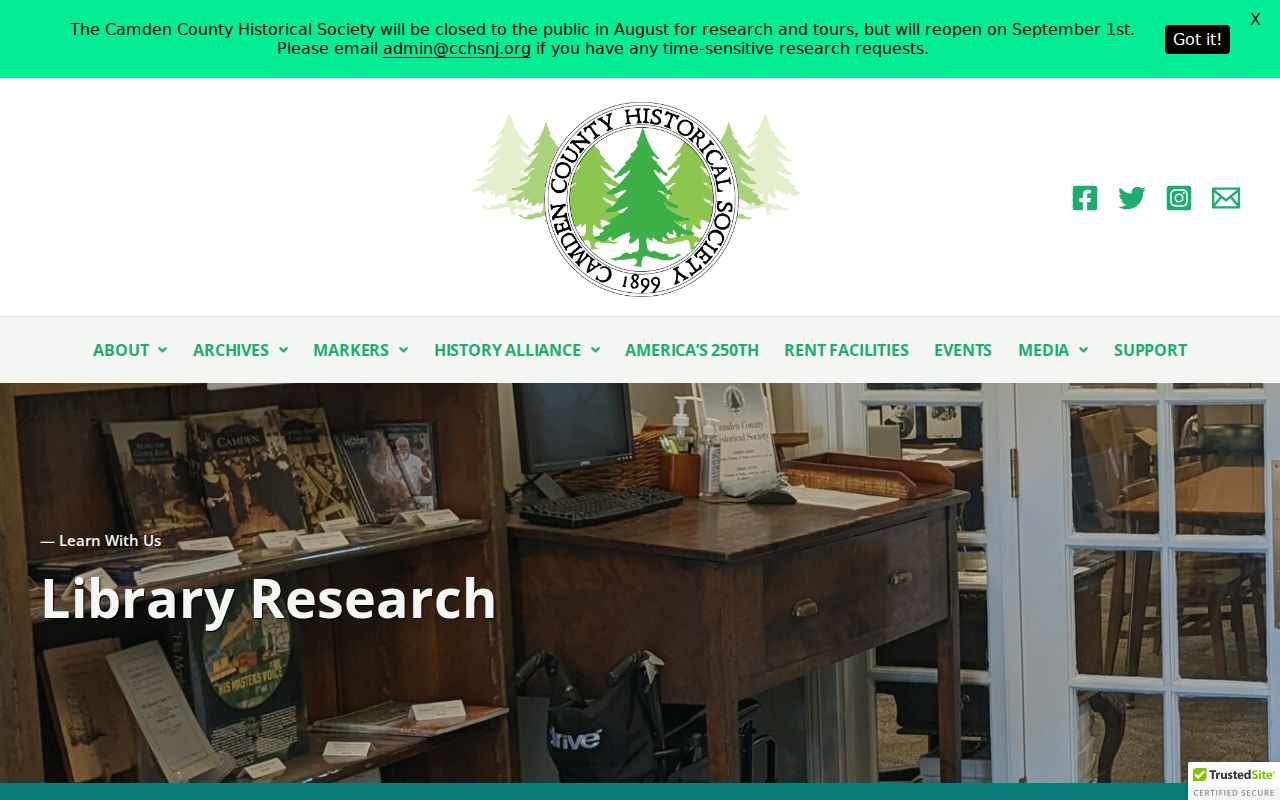
CCHS gives a Lindenwold searcher an in-person route, a mail or email research route, and related newspapers or maps when a library reel is incomplete.
Note: The collection description names Camden directories and telephone books, but it does not verify an exact Lindenwold volume or reverse-directory year.
Lindenwold Directory Digital Limits
It is a common mistake to assume that a historical collection’s online archive is a full directory database. The CCHS online archive describes a digitized photograph portion of the physical collection. It requires an OCLC account linked to CCHS membership, and manual approval can take one to two days. It is an archive-access route, not evidence that a digitized Lindenwold volume is available there.
The Library of Congress New Jersey local-history guide is a useful second digital lead for directories, newspapers, the State Archives, and historical organizations. Search by locality and year, then confirm the displayed volume and page. The research did not locate an official scanned Lindenwold directory entry, so an online hit should remain a lead until the source page is inspected.
For the archive access screen, use the CCHS online archive source.
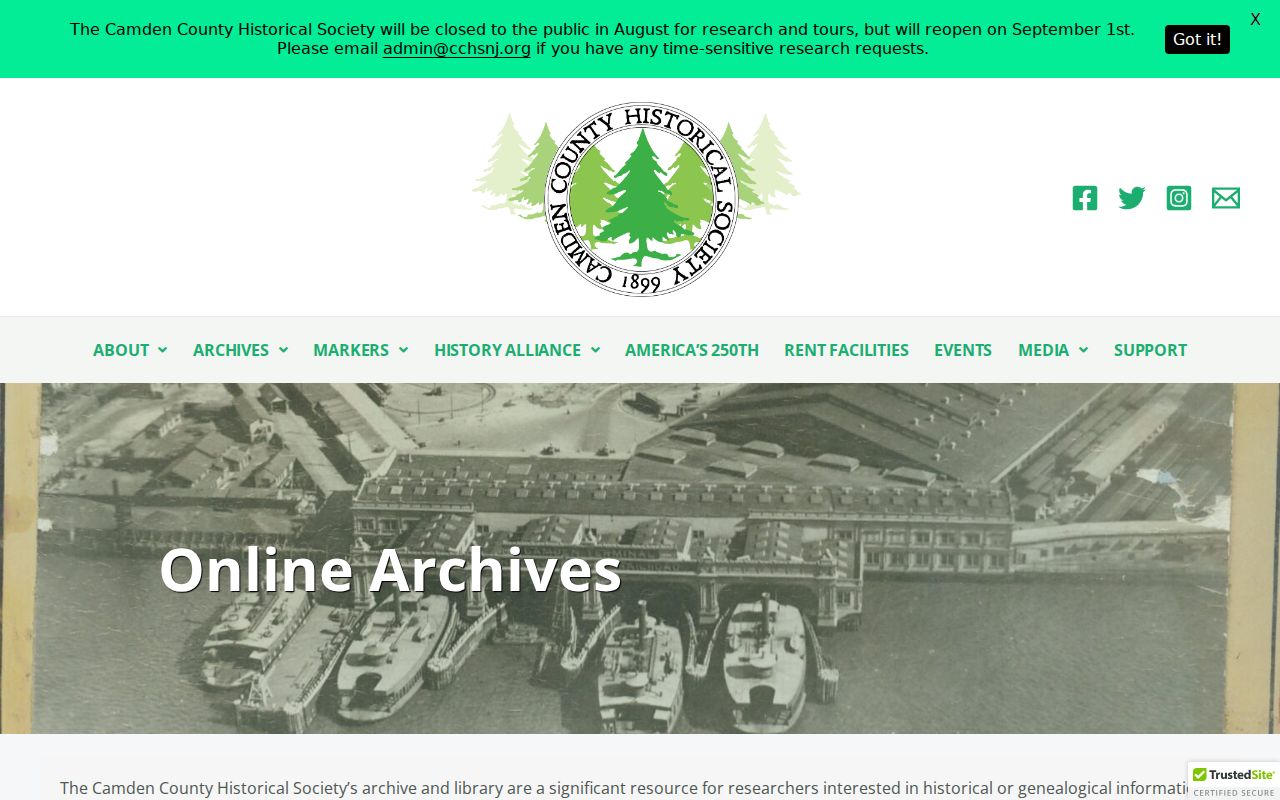
The membership gate shown here is why a digital collection should be described precisely instead of being presented as an unrestricted Lindenwold directory search.
Lindenwold Historical Directory Context
Lindenwold Borough formed on April 23, 1929, and its first official meeting was held May 31 at the old Fire Hall at Linden Avenue and Berlin Road. That municipal beginning helps place a directory or street reference in time, but it does not mean the people or parcels in the area began there in 1929. Earlier entries may use another locality context or rely on Camden County and, for older deed context, Gloucester County records.
The local historical-photo project is a useful hands-on companion to written directories. A 2024 borough newsletter invites residents to lend old photographs, films, postcards, yearbooks, and documents for scanning or copying, with originals returned. It refers to an approximately 1898 General Store, Post Office, and Halyburton Realty image at 10 North Berlin Road. A photo, directory line, map, and newspaper can be kept as separate dated items rather than combined into an unsupported household story.
Trace Lindenwold Directory Years
A household trail becomes more reliable when each result is tied to a year and tested against another source. Directory volumes can bridge the long intervals between federal census years, while an obituary, deed, or estate filing may explain a move or disappearance. Do not turn an address line into a claim of ownership. For current parcel records, the address-focused route belongs on the Lindenwold street address directory.
- Choose the earliest confirmed spelling and search the library reel or CCHS directory collection for that year.
- Copy the title, locality heading, page, name line, and street line exactly as shown.
- Move forward to the next available directory year, noting spelling changes, address changes, and missing reel years separately.
Once the available directory years are in order, test the dated trail against the closest census and an event record.
- Pair the dated directory evidence with the nearest available federal or New Jersey census snapshot, without treating either as annual proof.
- Use the Courier Post microfilm, CCHS obituary material, State Archives, or Surrogate records to test a move, death, or estate event.
A person who vanishes from a dated Lindenwold volume may have moved, died, been omitted, used another name form, or fallen into a collection gap. The right conclusion is the narrow one: no entry was found in the inspected volume. When a historical name needs modern record context, the Lindenwold resident lookup route uses official current and state-level systems without treating old listings as current residence.
Note: Preserve source dates and page images so a later researcher can distinguish a documented Lindenwold listing from an untested inference.